
The Skin Barrier & Microbiome Skincare Trend, Explained for UAE Skin
If you already know the basics of the skin barrier, this is the next step. If you've spent any time on skincare social media lately, you've probably seen the words "skin barrier" and "microbiome" everywhere. Unlike a lot of skincare trends, this one isn't about a new miracle ingredient or a 12-step routine - it's a shift back toward understanding what your skin actually does, and working with it instead of against it.
For anyone living in the UAE, this trend is worth paying real attention to. Between the outdoor heat, the humidity, and the near-constant air conditioning most of us move between all day, few climates put more strain on the skin barrier than this one.
In this guide, we explain what the skin barrier and microbiome actually are, why this trend is genuine science rather than hype, why UAE conditions make it especially relevant, and which ingredients actually support it.
What Is the Skin Barrier, Exactly?
Your skin barrier is the outermost layer of your skin - often called the "stratum corneum." Think of it as a brick wall: skin cells are the bricks, and lipids (fats) are the mortar holding everything together.
A healthy barrier does two jobs at once: it keeps moisture in, and it keeps irritants, pollutants and bacteria out. When that barrier is damaged or weakened, both jobs suffer - skin loses water more easily (leading to dryness, tightness and fine lines), while becoming more vulnerable to redness, sensitivity and breakouts.
What Does the "Microbiome" Have to Do With It?
Your skin isn't sterile - it's home to millions of bacteria, fungi and other microorganisms, collectively called the skin microbiome. In a balanced state, these microorganisms actually help protect the skin barrier, crowd out harmful bacteria, and support calm, healthy-looking skin.
The trend toward "microbiome-friendly" skincare is about formulating products that support this natural balance, rather than stripping it away with harsh cleansers or overly aggressive actives. You'll increasingly see three related terms on skincare packaging:
- Prebiotics - ingredients that feed the skin's beneficial bacteria
- Probiotics - beneficial bacteria (or bacteria-derived ingredients) added to a formula
- Postbiotics - the beneficial byproducts created when bacteria break down other ingredients, often used because they're more stable in a bottle than live bacteria
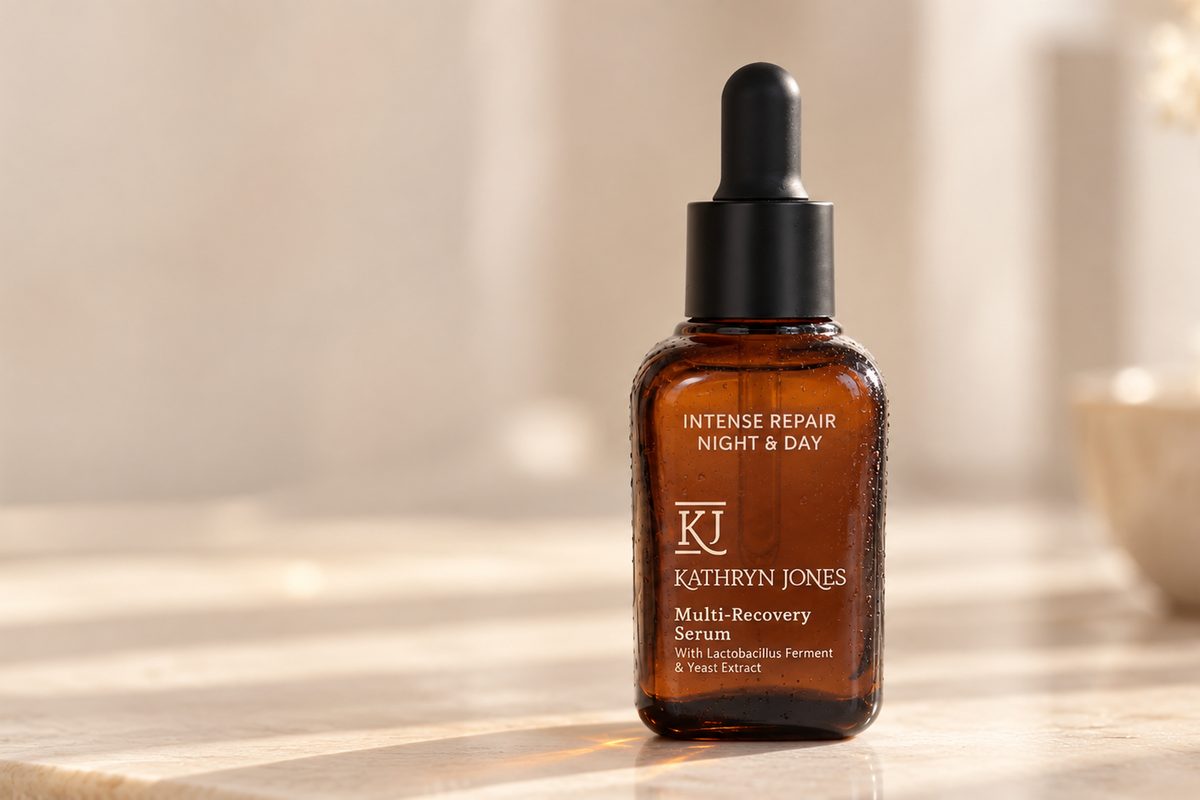
Our own Intense Repair Night & Day serum was formulated specifically around this idea. It combines several microbiome-friendly ingredients in one formula: Lactobacillus Ferment and Bifida Ferment Lysate (both probiotic-derived ingredients that help support the skin's beneficial bacteria), Saccharomyces Cerevisiae (Yeast) Extract, and Beta-Glucan, a soothing polysaccharide that helps calm and strengthen a stressed barrier. These sit alongside hyaluronic acid and a multi-peptide complex (Tripeptide-32), working together to repair and protect the skin's natural biome rather than just sitting on the surface.
Why This Trend Is Different From Most
Most skincare trends come and go with a viral ingredient or a new routine format. The skin barrier and microbiome conversation is different because it isn't new - dermatologists have understood the importance of barrier function for decades. What's changed is that consumers are finally asking about it, and formulators are being more transparent about which ingredients genuinely support it.
That's a trend we can get behind. At KJ Serums, we've always believed skincare should be judged by whether an ingredient does something real for your skin - not by how well it markets. A trend that's really just dermatology catching up with public attention is exactly the kind of "trend" that holds up.
Why UAE Conditions Make This Especially Relevant
Skin barrier health isn't an abstract concern here - it's a daily reality shaped by the environment. A few specific challenges make the UAE particularly tough on the skin barrier:
- Extreme outdoor heat increases water loss through the skin and can trigger excess oil production as skin tries to compensate.
- High humidity outdoors, followed by constant air conditioning indoors, creates repeated swings between damp heat and dry, cooled air - a cycle that stresses the barrier far more than a stable climate would.
- Air conditioning itself is notoriously dehydrating, drawing moisture out of the air (and your skin) in offices, malls, cars and homes.
- Dust and pollution exposure outdoors adds another layer that a compromised barrier struggles to defend against.
Moving between these extremes multiple times a day, most days of the week, is exactly the kind of repeated stress that weakens the skin barrier over time - which is why barrier-focused ingredients aren't a nice-to-have here, they're close to essential.
Ingredients That Genuinely Support the Skin Barrier
Not every product claiming to be "barrier-friendly" actually is. Look for ingredients with real evidence behind them, including:
- Niacinamide - supports the skin's natural barrier function, calms visible redness and irritation, and helps even out tone
- Hyaluronic acid - holds water in the skin, helping counter the moisture loss that heat, humidity swings and air conditioning all cause
- Antioxidants - help defend the skin from the oxidative stress caused by heat, pollution and sun exposure
- Probiotic and postbiotic-derived ingredients - such as Lactobacillus Ferment, Bifida Ferment Lysate and Beta-Glucan, which support the skin's microbiome while helping calm and strengthen the barrier itself
Our own Intense Repair Night & Day is a good example of a formula built around several of these at once - it combines Lactobacillus Ferment, Bifida Ferment Lysate, Saccharomyces Cerevisiae (Yeast) Extract and Beta-Glucan with hyaluronic acid and Tripeptide-32, rather than relying on a single barrier-supportive ingredient.
Just as important as what you add is what you avoid: over-exfoliating, harsh sulphate cleansers, and skipping moisturiser because it's hot outside are some of the most common ways people unintentionally damage their own barrier in this climate.
A Simple, Barrier-Friendly Routine for UAE Skin
You don't need ten products to support your skin barrier. A focused routine tends to work better than an elaborate one:
- Cleanse gently - avoid stripping cleansers, especially if you're moving between heat and air conditioning throughout the day
- Repair and protect the biome - a probiotic serum like Intense Repair Night & Day is formulated specifically to support the skin's microbiome, combining Lactobacillus Ferment, Bifida Ferment Lysate, Saccharomyces Cerevisiae (Yeast) Extract and Beta-Glucan with Tripeptide-32 and hyaluronic acid, morning and night
- Calm and balance - a niacinamide serum like Skin Karma helps support barrier function while calming redness and irritation
- Hydrate - a hyaluronic acid serum like Happy Face helps skin hold onto moisture that heat and air conditioning are constantly trying to pull away
- Protect - daily SPF such as Solar Defence SPF50 PA++++ is non-negotiable in UAE sun, and doubles as protection for an already-stressed barrier
The goal isn't more steps - it's the right steps, chosen because they support what your skin is already trying to do.
How Long Does It Take to Repair a Damaged Barrier?
This is one of the most common questions we hear, and the honest answer is: longer than most people expect. A mildly stressed barrier can start to feel more comfortable within a week or two of gentler cleansing and consistent hydration. A more significantly damaged barrier - the kind that comes from months of over-exfoliating, harsh actives, or repeated heat-to-air-conditioning stress - can take four to eight weeks of consistent care to visibly recover.
The most common mistake people make is giving up on a barrier-focused routine after a few days because they don't see instant results, then going back to the habits that caused the problem in the first place. Consistency matters more than any single product here.
Common Myths About Barrier and Microbiome Skincare
As with any trending topic, some misunderstandings have crept in alongside the genuine science. A few worth clearing up:
- "Natural" doesn't automatically mean barrier-friendly. Plenty of natural ingredients (certain essential oils, for example) can be just as irritating to a compromised barrier as synthetic ones. What matters is the ingredient's actual effect on skin, not its origin.
- More products doesn't mean more support. Layering multiple "barrier repair" products at once can sometimes overwhelm skin that's already sensitised. A focused routine usually outperforms a crowded one.
- Probiotic skincare doesn't need live bacteria to be effective. Because postbiotics are more stable in a bottle, many effective microbiome-supporting products use postbiotics rather than live cultures - the "probiotic" marketing term is often used loosely across all three categories.
Frequently Asked Questions
How do I know if my skin barrier is damaged?
Common signs include unusual dryness or tightness, increased sensitivity or stinging when using products that never used to bother you, redness, rough or flaky texture, and breakouts that seem to appear out of nowhere. If your skin has become reactive to products you've used for years without issue, barrier damage is a common underlying cause.
Does air conditioning really affect the skin barrier?
Yes. Air conditioning lowers the humidity in the air around you, which increases water loss from the skin's surface. Spending most of the day in air-conditioned spaces, especially after time outdoors in UAE heat, creates repeated environmental swings that can weaken the barrier over time.
What's the difference between prebiotics, probiotics and postbiotics in skincare?
Prebiotics feed the skin's existing beneficial bacteria, probiotics add beneficial bacteria (or bacteria-derived ingredients) to a formula, and postbiotics are the beneficial compounds bacteria produce as a byproduct - often preferred in skincare because they're more stable in a bottle than live bacteria.
Can I support my skin barrier without changing my whole routine?
Yes. Often the most effective change is subtraction, not addition - cutting back on over-exfoliation and harsh cleansers - combined with adding one or two genuinely barrier-supportive ingredients like niacinamide or hyaluronic acid.
The KJ Serums Approach
We're glad to see skincare conversation shifting toward barrier health and away from routines built purely around trends. It's the kind of science-led thinking we've built KJ Serums around from the start - formulating with ingredients that have a genuine, evidence-based role, rather than chasing whatever's currently viral.
If you're not sure where your own skin barrier stands, or which of our serums would suit your skin best, our team offers free skincare consultations - a good place to start before adding anything new to your routine.
Explore Barrier-Friendly Skincare
Discover the KJ Serums collection, formulated with purposeful, evidence-based ingredients that respect what your skin is already trying to do - especially important in the UAE's demanding climate.
Browse the full KJ Serums collection, or read more on the KJ Serums blog.

Leave a comment
This site is protected by hCaptcha and the hCaptcha Privacy Policy and Terms of Service apply.