
Does Vitamin C Serum Expire? Signs of Oxidation & Why Freshness Matters
Vitamin C is one of the most researched and loved ingredients in skincare - we've already covered its core benefits and why fresh formulation matters when you're choosing a serum. But there's a separate question worth answering on its own, once a bottle is already sitting in your bathroom cabinet.
There's something about Vitamin C that doesn't get talked about nearly enough:
Freshness matters.
In fact, you could be applying Vitamin C every day without realising that your serum is no longer giving your skin the benefits you originally bought it for.
So, does Vitamin C serum expire? How can you tell if your Vitamin C serum has oxidised? And does it really matter how fresh it is?
Let's explain.
Why Does Vitamin C Serum Oxidise?
Pure Vitamin C, or L-ascorbic acid, is a wonderfully effective skincare ingredient, but it's also naturally unstable.
Once formulated into a serum, exposure to air, light and heat can gradually cause Vitamin C to oxidise. As this happens, the formula becomes less active.
This is why you'll often see pure Vitamin C serums packaged in dark or amber bottles and why correct storage is so important.
It's particularly relevant if you live somewhere hot and sunny like Dubai or elsewhere in the UAE, where skincare can easily be exposed to high temperatures.
How to Tell If Your Vitamin C Serum Has Oxidised
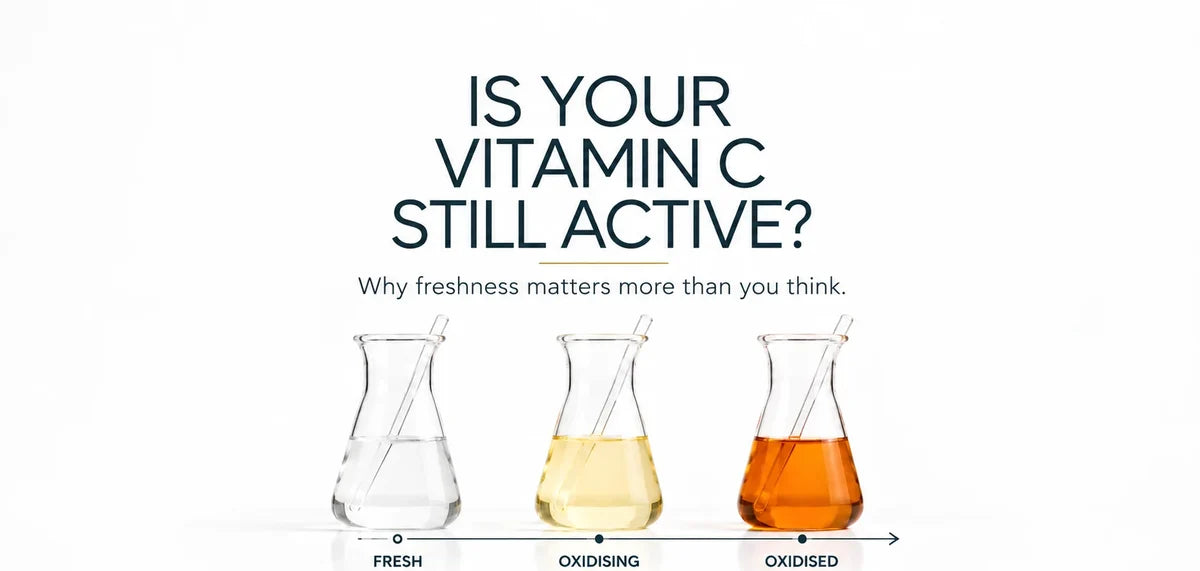
One of the easiest clues is a change in colour.
A fresh L-ascorbic acid serum should be relatively clear. As oxidation progresses, it can become increasingly yellow, orange and eventually brown.
A slight colour change doesn't necessarily mean you need to immediately throw your serum away, but significant darkening can indicate that oxidation has taken place.
And this raises an interesting question:
How long was your Vitamin C serum sitting in a warehouse or on a shop shelf before you bought it?
Unless you know when it was manufactured, it can be difficult to know just how fresh your Vitamin C really is.
Why Fresh Vitamin C Serum Performs Better
This is exactly why we take a different approach at KJ Serums.
Our Triology Fresh Vitamin C Facial Serum – 30ml and Triology Fresh Vitamin C Facial Serum – 60ml aren't produced in enormous batches designed to sit on shelves for months.
We hand-blend Triology fresh every month using pure L-ascorbic acid combined with Vitamin E and ferulic acid.
Triology is deliberately a short-life serum. We recommend using your bottle within approximately one month of receiving it, while the formula is fresh and active.
It may be less convenient for us as a manufacturer, but when you're investing in active skincare, we believe freshness matters.
What Do Vitamin E and Ferulic Acid Do in a Vitamin C Serum?
Triology doesn't contain Vitamin C alone.
We've combined L-ascorbic acid with Vitamin E and ferulic acid to create a powerful antioxidant formula designed to target several common skin concerns, including:
Uneven skin tone and pigmentation
Dull-looking skin
Visible signs of ageing
UV and environmental skin damage
Loss of radiance
It's a particularly useful combination if your goal is brighter, more even-looking skin rather than simply adding another serum to your bathroom shelf.
10% or 20% Vitamin C — Which Should You Choose?
More isn't automatically better.
If you've never used fresh L-ascorbic acid before, we recommend starting with 10% Triology to allow your skin to acclimatise.
If your skin is already accustomed to fresh Vitamin C, you can consider the 20% concentration.
Skincare should always be about finding the right formula for your skin rather than automatically choosing the strongest concentration available.
When Should You Apply Vitamin C Serum?
Vitamin C works beautifully as part of a morning skincare routine because of its antioxidant properties. For more on why the order of your steps matters, see Skincare Routine Steps: Why Consistency Is Key to Healthy Skin.
A simple KJ morning routine could look like:
Cleanse → Triology Fresh Vitamin C → HydraSilk Moisturiser → SPF 50
For skin that needs additional hydration, follow your serum with HydraSilk Facial Moisturiser.
And don't forget your sunscreen. SPF should always be the final step of your morning skincare routine, particularly if pigmentation and premature skin ageing are concerns — see Best Daily Sunscreen in the UAE for more.
How Should You Store Vitamin C Serum?
If you've invested in a good Vitamin C serum, how you look after it matters.
Keep it somewhere cool and dark.
Don't leave your Vitamin C serum sitting in direct sunlight or somewhere that becomes very hot.
Keep the bottle tightly closed.
Exposure to oxygen contributes to oxidation, so don't leave your serum open unnecessarily.
Don't save it for special occasions.
Active skincare is there to be used! With a fresh Vitamin C serum in particular, consistent use makes far more sense than keeping the bottle for months.
Watch the colour.
Get to know what your Vitamin C serum looks like when it's fresh. This makes it much easier to recognise significant oxidation if it occurs.
With Triology, we recommend storing the serum in a cool, dark place with the lid tightly secured and using it within approximately one month while it's fresh and active.
Is Vitamin C Good for Pigmentation and Dark Spots?
Vitamin C is particularly popular with people concerned about pigmentation, dark spots, post-blemish marks, sun-related pigmentation and uneven skin tone.
But pigmentation is complex, and Vitamin C doesn't necessarily need to do all the work alone.
Depending on your skin, a pigmentation routine may combine Vitamin C with other ingredients including niacinamide, retinol and daily high-protection sunscreen.
If pigmentation is your main concern, KJ Serums also has targeted pigmentation routines designed to combine complementary active ingredients.
Our Anti-Pigmentation Skincare Kit – With Retinol combines Triology with targeted ingredients including retinol, niacinamide and an additional oil-soluble form of Vitamin C.
For customers who don't use retinol, including during pregnancy and breastfeeding, you can explore our KJ Serums pigmentation collection for alternative options.
Whatever routine you choose, consistency and daily sun protection are particularly important when pigmentation is your concern.
What About Vitamin C for Dry or Mature Skin?
Vitamin C isn't only about pigmentation.
As part of a well-rounded routine, it can be particularly useful for mature skin, where concerns may include dullness, uneven tone, loss of firmness and visible signs of ageing.
But hydration is equally important.
If your skin feels dry or dehydrated, follow your Vitamin C serum with HydraSilk Facial Moisturiser. HydraSilk provides lightweight hydration while helping skin feel softer, smoother and more comfortable.
For mature skin where fine lines, firmness and elasticity are also concerns, Peptide Lift Anti-Wrinkle Serum can be incorporated alongside Triology and HydraSilk.
A simple anti-ageing morning routine could look like:
Triology → Peptide Lift → HydraSilk → SPF 50
This gives your skin a combination of antioxidant protection, peptides and hydration without creating an unnecessarily complicated routine.
If anti-ageing is your main concern and you'd prefer a complete routine, you can also explore the KJ Serums Anti-Ageing Skincare Kit.
Can I Use Retinol and Vitamin C in the Same Routine?
Yes, but you don't have to introduce everything at once.
For customers using both KJ Vitamin C and retinol, Triology can form part of your morning routine, while ReNew Retinol can be incorporated into your evening skincare routine.
If you're new to active skincare, introduce products gradually and pay attention to how your skin responds.
And remember: retinol isn't recommended during pregnancy or breastfeeding.
Frequently Asked Questions About Vitamin C Serum Oxidation
Can I still use my Vitamin C serum if it's turned yellow or brown?
A slight yellow tint isn't necessarily a problem, but noticeable darkening to orange or brown usually means the L-ascorbic acid has oxidised and lost much of its effectiveness. It's unlikely to harm your skin, but it won't deliver the same brightening or antioxidant benefits — at that point it's best to replace it.
Is oxidised Vitamin C serum harmful to skin?
Generally no, but it can be less effective and, in some cases, more likely to cause irritation than a fresh formula. If your serum has changed colour significantly or developed an odd smell, it's better to stop using it.
How long does Vitamin C serum last once opened?
This depends heavily on the formula and packaging, but most pure L-ascorbic acid serums are at their best within one to three months of opening. Short-life formulas like Triology, which is hand-blended fresh each month, are designed to be used within about a month for maximum activity.
Should I store Vitamin C serum in the fridge?
A cool, dark place is what matters most — a fridge can help slow oxidation further, but it isn't essential. Keeping the bottle away from heat, light and open air will make the biggest difference to how long your serum stays active.
Does Vitamin C Serum Expire?
Vitamin C skincare doesn't suddenly "expire" at an exact moment like a carton of milk, but pure L-ascorbic acid gradually oxidises and loses activity over time.
That's why formulation, packaging, storage and freshness all matter.
We spend a lot of time looking at ingredient percentages, trending actives and increasingly complicated skincare routines.
But sometimes a much simpler question matters:
Is the active ingredient I'm putting on my face still active?
When it comes to pure Vitamin C, that's a question worth asking.
It's also why we make Triology differently.
Fresh Vitamin C. Hand-blended every month. Not off a shelf.
Because skincare isn't about how impressive an ingredient list looks on a bottle.
It's about what you're actually putting on your skin.

Leave a comment
This site is protected by hCaptcha and the hCaptcha Privacy Policy and Terms of Service apply.